Smart Geotechnics & Extreme Events Laboratory
SmartGeoX focuses on coastal, marine, and environmental geotechnics, harnessing the power of ML/AI and technology for smart infrastructure.
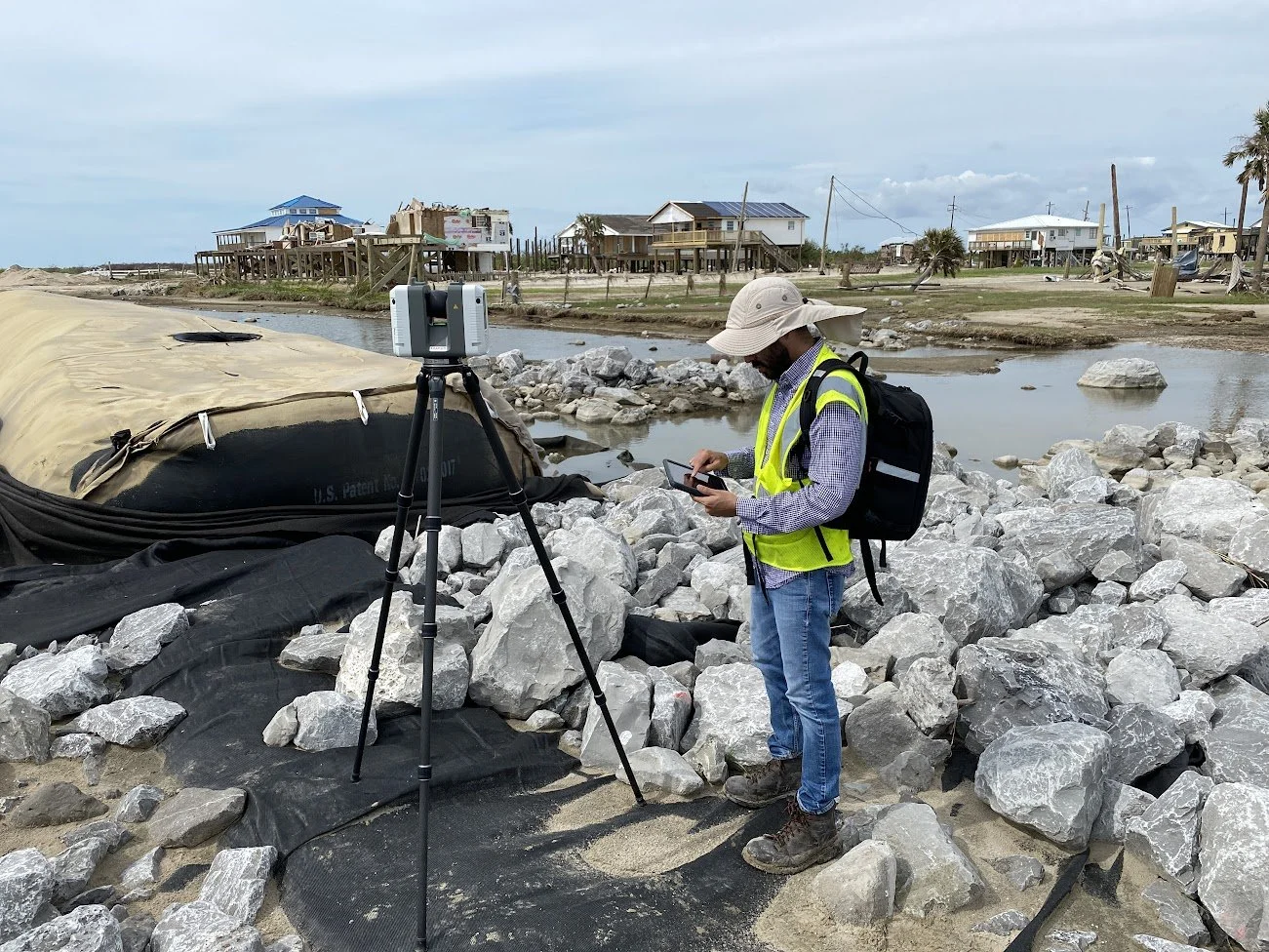
Dr. Omar Ulloa performing terrestrial LiDAR after Hurricane Ida.
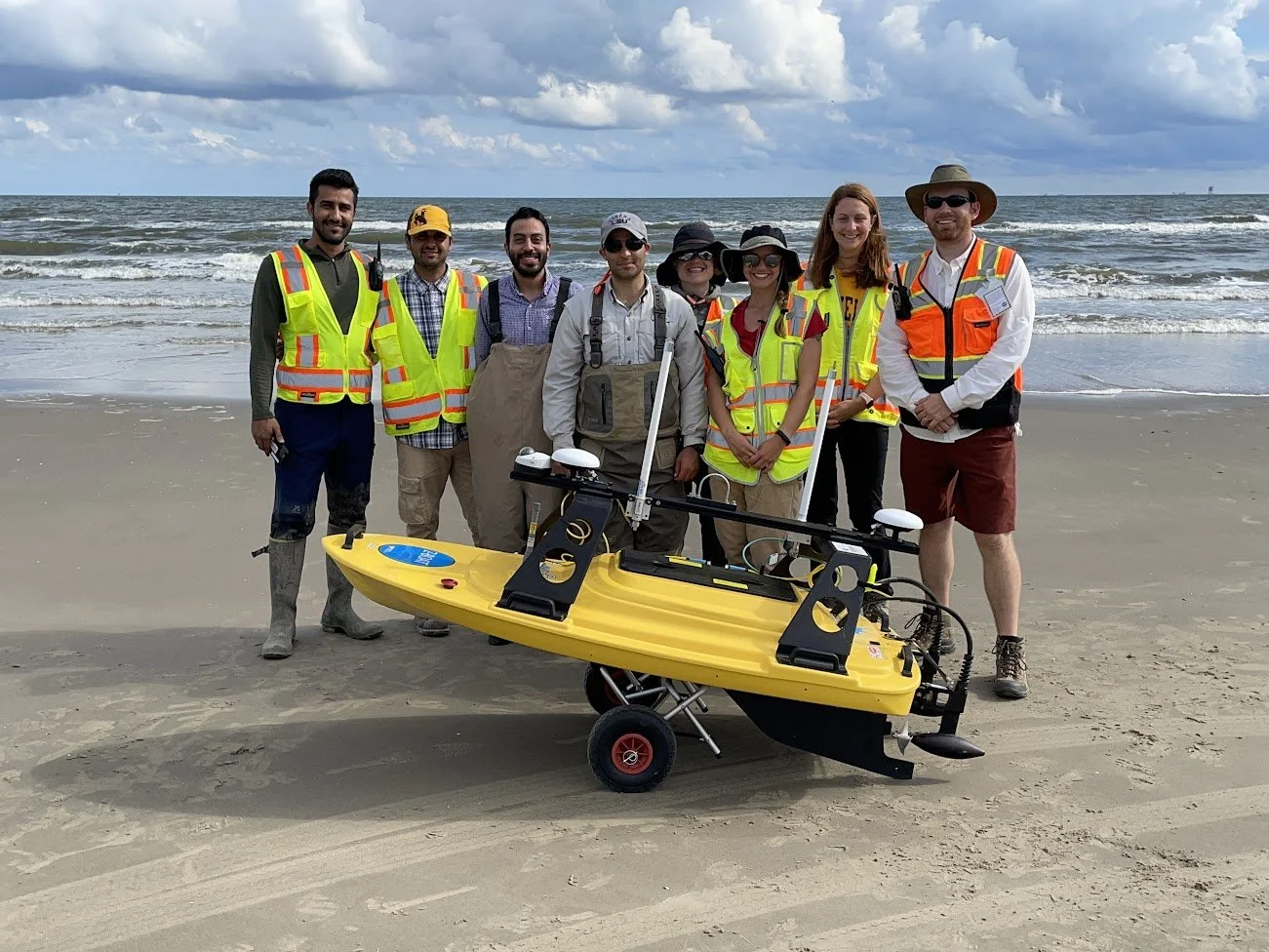
Z-boat surveys at Grand Isle, LA with NSF NHERI RAPID team.
April 6 - 8, 2026
Jafari Research Team Visits Smithsonian Environmental Research Center (SERC)
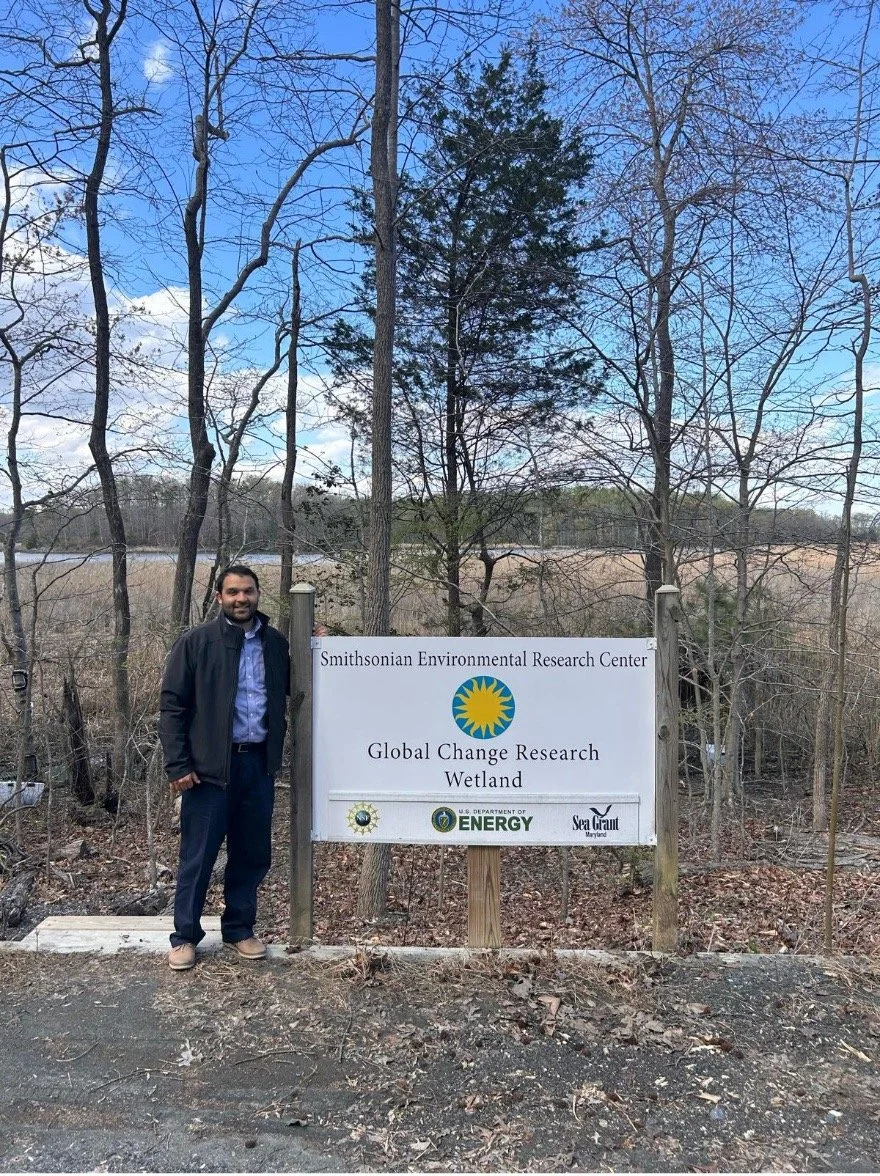
Dr. Navid Jafari and graduate researcher Mohamed Hassan recently visited the Smithsonian Environmental Research Center (SERC), where they delivered technical seminars and participated in collaborative field activities with SERC researchers. As part of the visit, the team demonstrated the capabilities of Cone Penetration Testing (CPT) and PANDA dynamic cone penetrometer equipment and collected field measurements at the Terrestrial Ecosystem Manipulation to Probe the Effects of Storm Treatments (TEMPEST) and Salt Marsh Accretion Response to Temperature eXperiment (SMARTX) research sites. The visit strengthened ongoing collaborations between the Jafari Research Team and SERC while highlighting the application of advanced geotechnical field testing to improve our understanding of coastal wetland resilience under changing environmental conditions.
April 2 - 3, 2026
Dr. Jafari Presents Invited Talk at the 2nd Texas G-I Annual Conference 2026
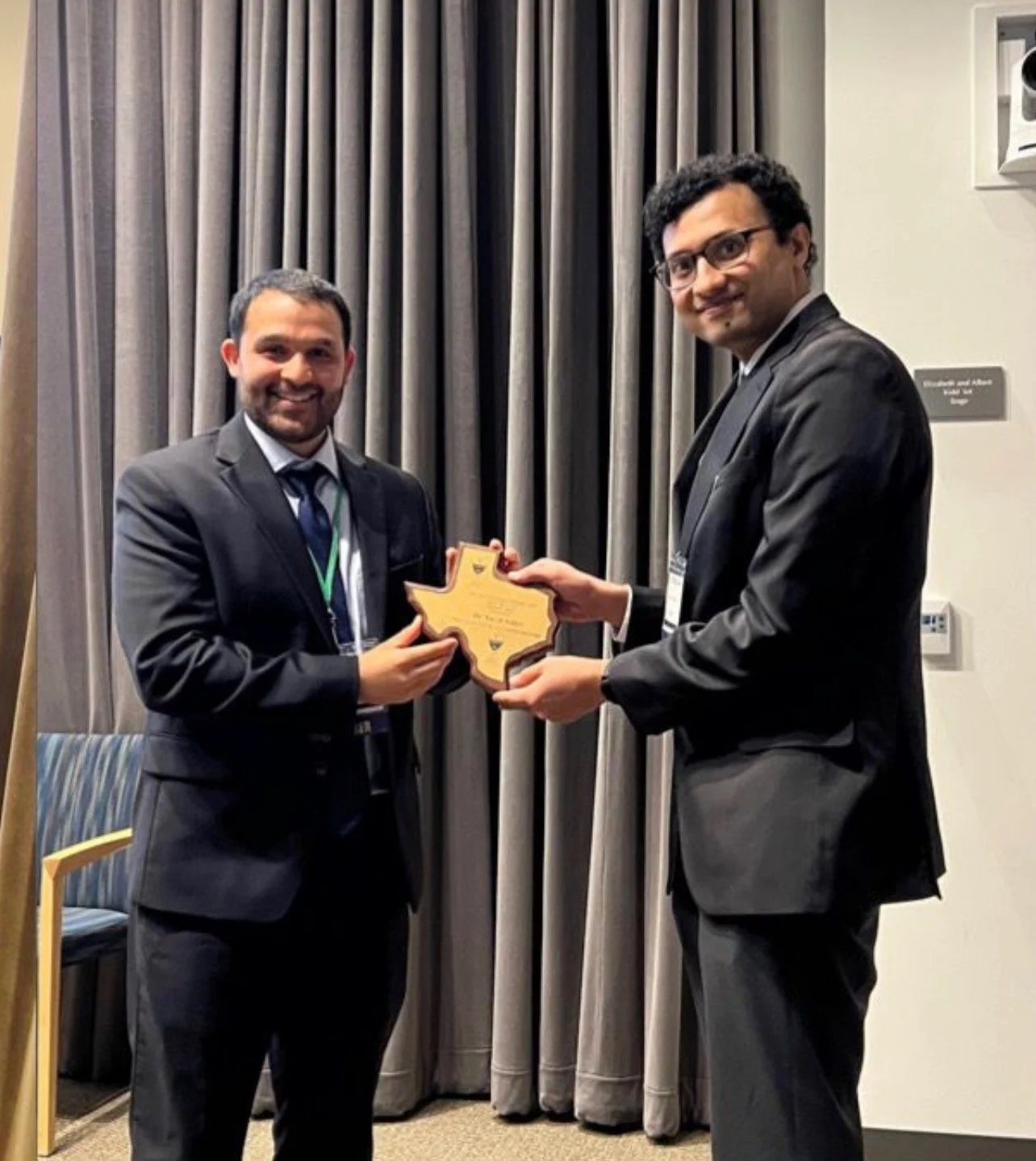
Dr. Navid Jafari delivered an invited presentation at the 2nd Texas G-I Annual Conference, held April 2–3, 2026. His presentation, "Designing Earthen Embankments with Cone Penetrometer Tests in Soft and Organic Soil," highlighted the use of cone penetration testing (CPT) to improve the design of embankments founded on soft and organic soils.
Graduate students Hamed Nasiri and Mohamed Hassan also represented the Jafari Research Team in the conference's student competition. The team proudly congratulates Hamed Nasiri for earning Second Place, recognizing his outstanding technical performance.
December 15, 2025
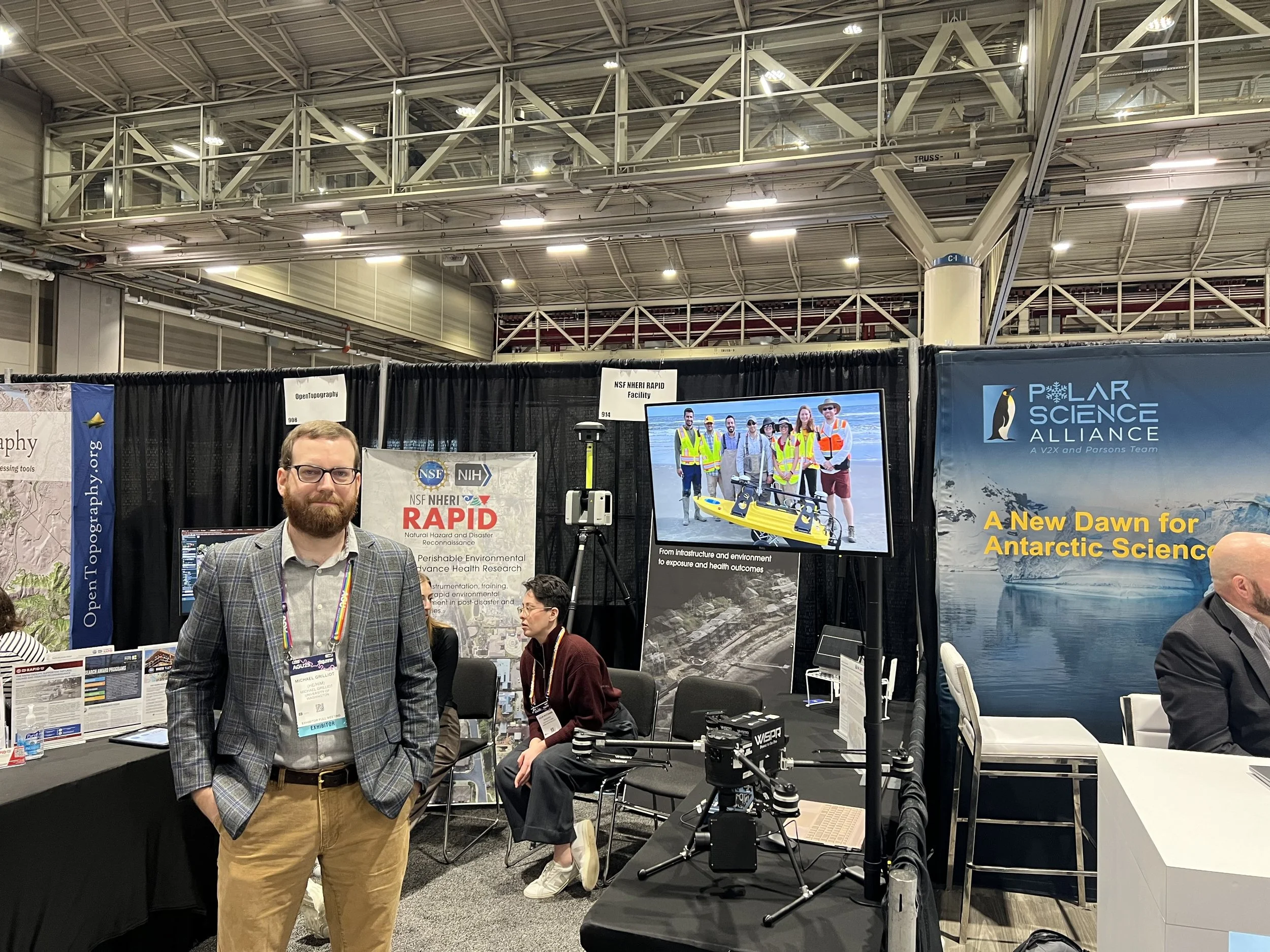
NSF NHERI RAPID team promotes SmartGeoX at AGU2025!
July 19, 2025
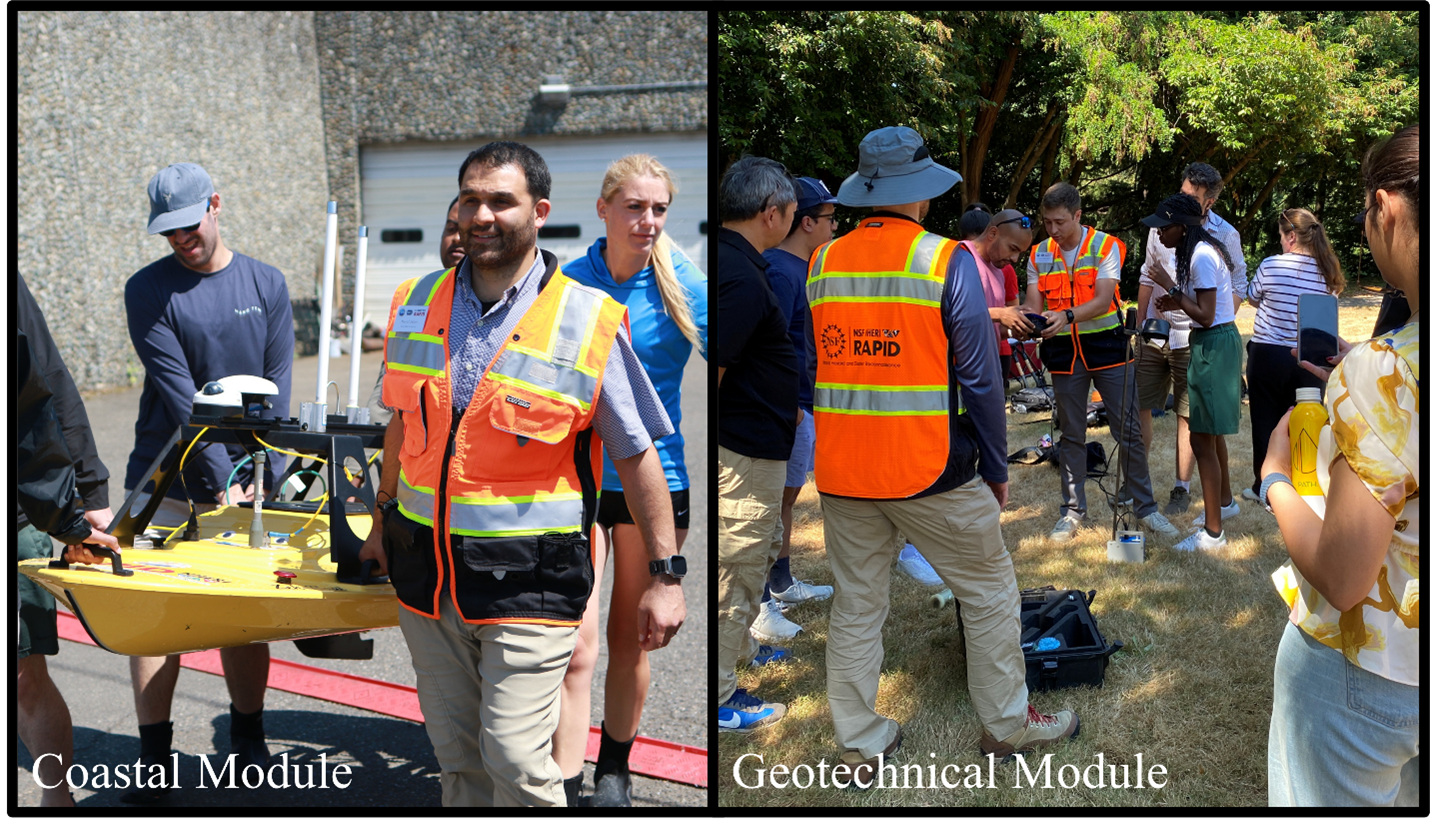
NHERI RAPID Facility Workshop – University of Washington, Washington
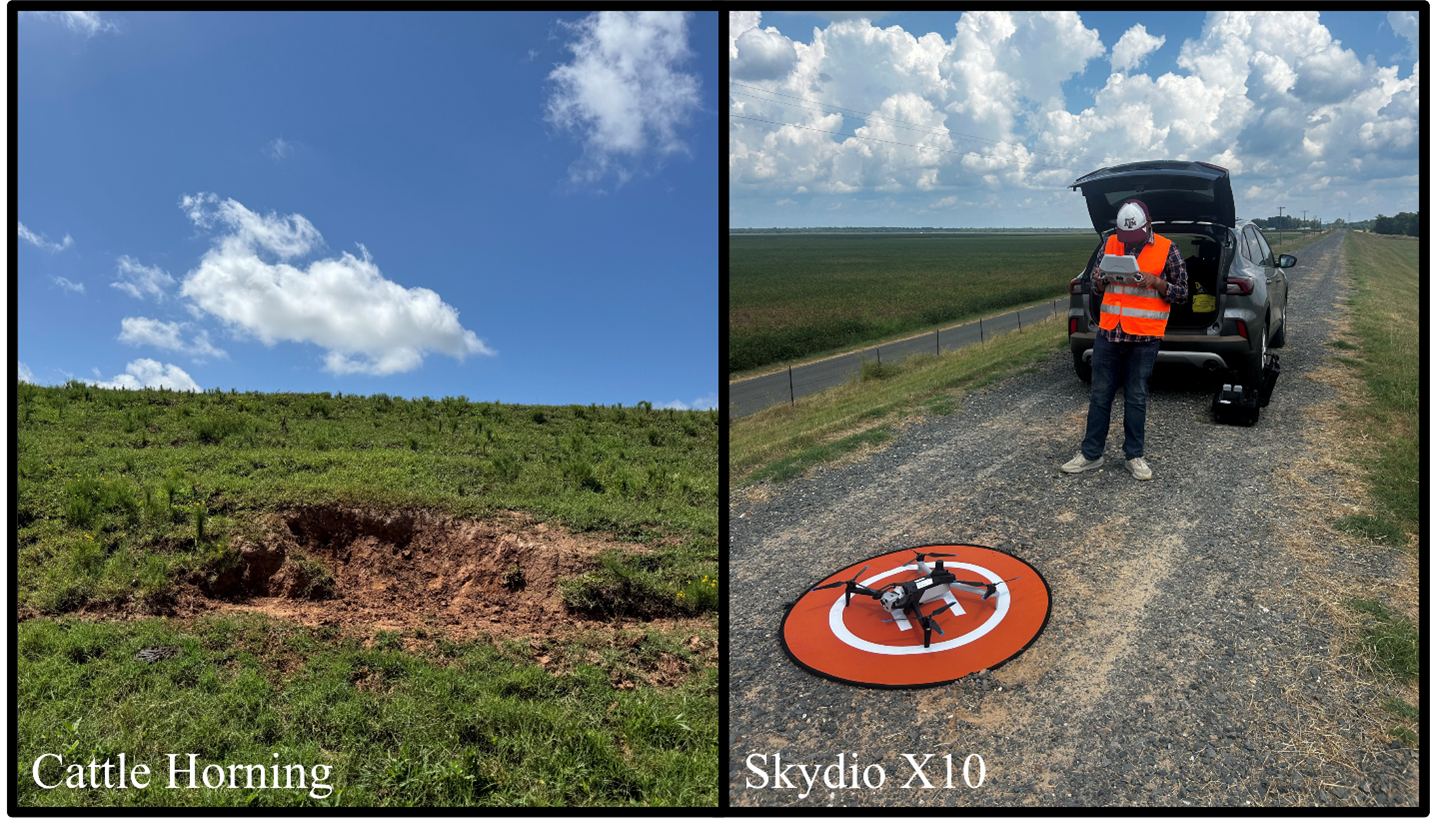
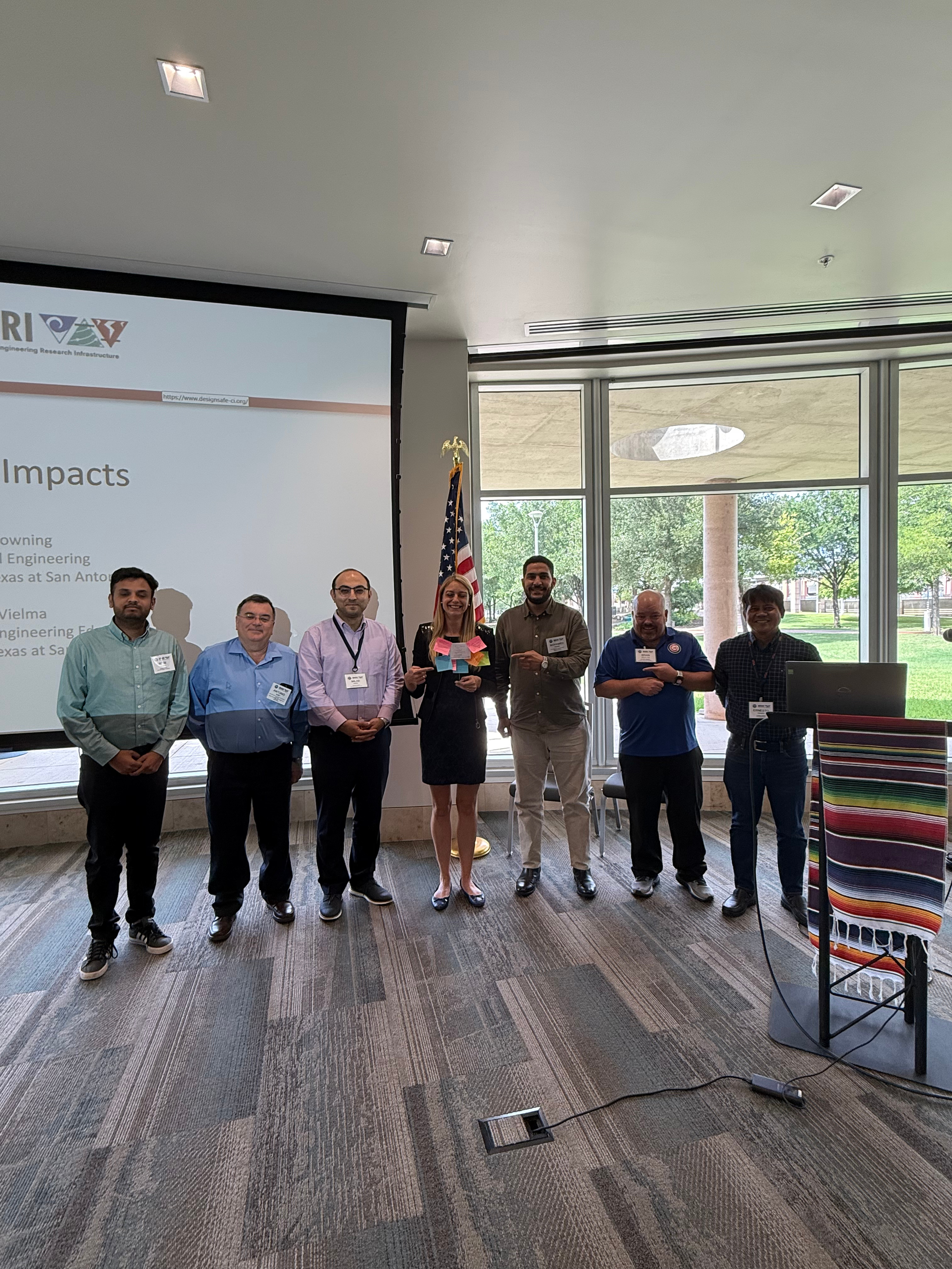
Dr. Navid Jafari and Cyrus Bahman traveled to the NSF RAPID facility at the University of Washington in Seattle to help put on their annual workshop for future users. They were able to give valuable insights to future users of the RAPID equipment. Dr. Jafari led the costal module for the workshop (left) and Cyrus aided in demonstrating some of the geotechnical equipment (right). This was a wonderful opportunity to share our expertise with the community, hopefully fostering future research for them and for our team.
June 11, 2025
Hassan Attends NHERI Summer Institute for Early Career Researchers
Mohamed Hassan, a doctoral researcher in the Jafari Lab, was selected to attend the NHERI Summer Institute (2025) for Early-Career faculty, hosted at the University of Texas at San Antonio. He also received a travel grant to support his participation. The institute brings together emerging scholars from across the U.S. to foster collaboration and innovation in natural hazards engineering research. During the program, Hassan engaged with faculty, NSF program directors, and NHERI facility managers to explore how large-scale experimental and computational infrastructure can advance resilience-focused research. His participation reflects the group’s growing engagement with national networks and commitment to preparing the next generation of researchers in geotechnical hazard mitigation and nature-based coastal systems.
Jafari Group Transitions to Texas A&M University
In January 2025, Dr. Jafari Research Group officially transitioned from Louisiana State University (LSU) to Texas A&M University (TAMU), joining the Zachry Department of Civil and Environmental Engineering. Led by Dr. Navid H. Jafari, the team continues its mission to advance research at the intersection of coastal geotechnics, environmental resilience, and infrastructure sustainability. This move opens new opportunities for collaboration within TAMU’s strong research ecosystem, including access to world-class facilities, high-performance computing resources, and interdisciplinary partnerships across coastal, marine, and environmental engineering domains.
March 19, 2024
Jafari honored with Arthur Casagrande Professional Development Award
ASCE has honored Navid H. Jafari, Ph.D., A.M.ASCE, with the 2024 Arthur Casagrande Professional Development Award for his pioneering work on coastal geotechnics and coastal protection using hard and natural infrastructure.
Jafari has made invaluable contributions and established himself as a leader and pioneer in the area of coastal geotechnical engineering in a nation where safeguarding coastal communities, economic hubs, and critical infrastructure networks is paramount to national security and enduring prosperity.
His ability as an interdisciplinary bridge-builder is exemplified by his collaborations across coastal engineering, systems ecology, and …Read More
December 19, 2024
I-Corps Training Alters Startup’s Target Market, Service Offering
In academia, the formula for success is publish or perish. In startups, the saying might as well be pivot or perish.
Case in point. X-Roots leaders Mohamed Hassan and Navid Jafari knew who the customers were for their technology, which provides insights into the health of wetland root systems. They validated their target market, state and … Read More
April 16, 2024
BATON ROUGE, LA – A team of LSU researchers led by LSU Civil and Environmental Engineering Associate Professor Navid Jafari (principal investigator) and LSU CEE Research Assistant Mohamed Hassan (co-PI) recently received a $50,000 National Science Foundation I-Corps grant to commercialize its algorithms in studying root productivity in Louisiana wetlands. A second grant was awarded by the Environmental Molecular Sciences Laboratory… Read More
May 31, 2023
#LSU launches Delta Institute to work collaboratively with industry on coastal R&D. Join us: https://thedeltainstitute.org Also, come see us in booths 601 and 603 @StateoftheCoast #SOC2023 this week! #ScholarshipFirst @LSU_CCE @LSUEngineering @LASeaGrant @CRCL1988 @LouisianaCPRA
May 11, 2023
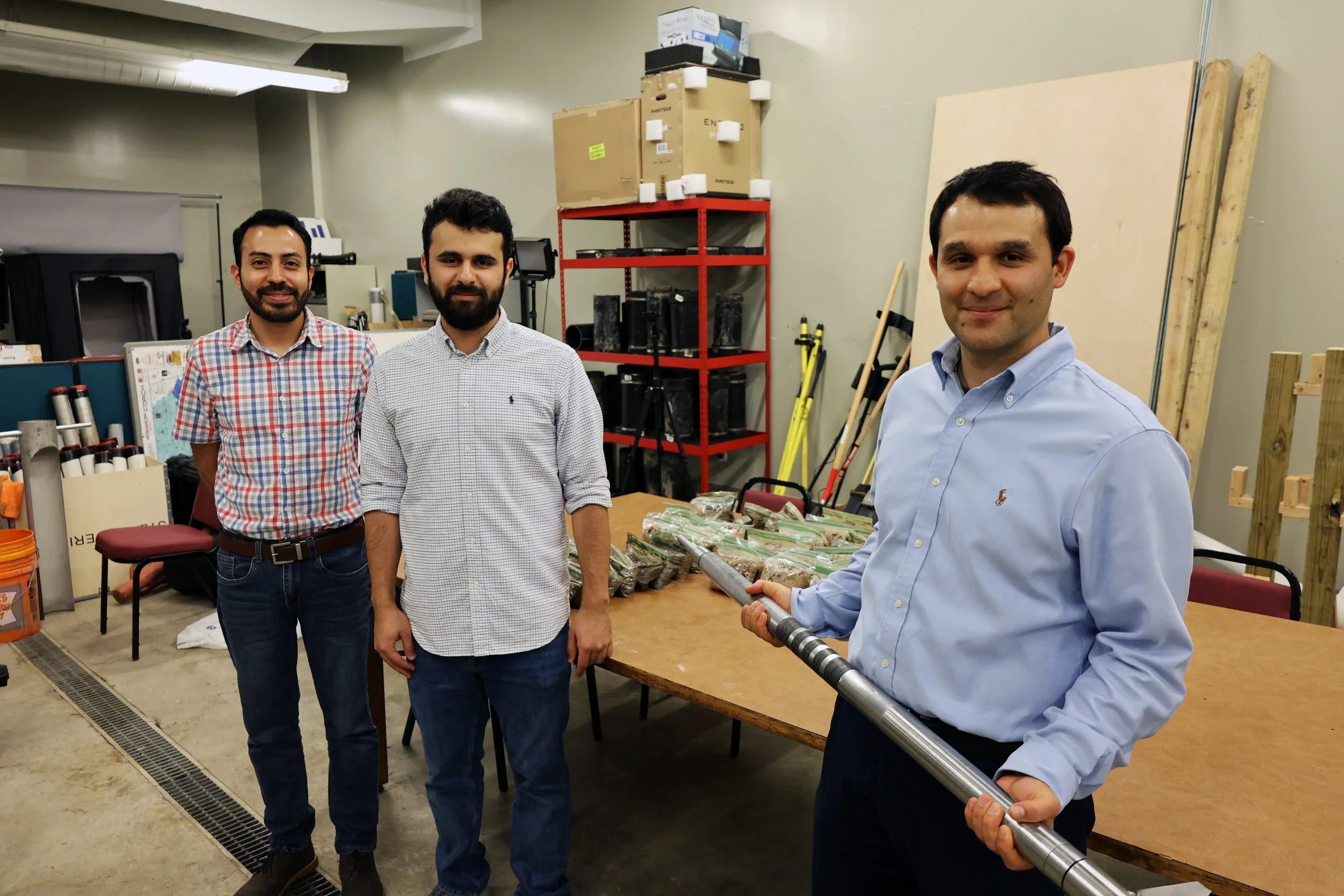
@LSU_CEE Professor @JafariLabLSU and a team of @LSU researchers have received an @NSF grant to fund and create the LSU Delta Institute, which will bring together scientists, engineers, and industry to work on developing solutions for the Louisiana coast. https://lsu.edu/eng/news/2023/
March 18, 2023
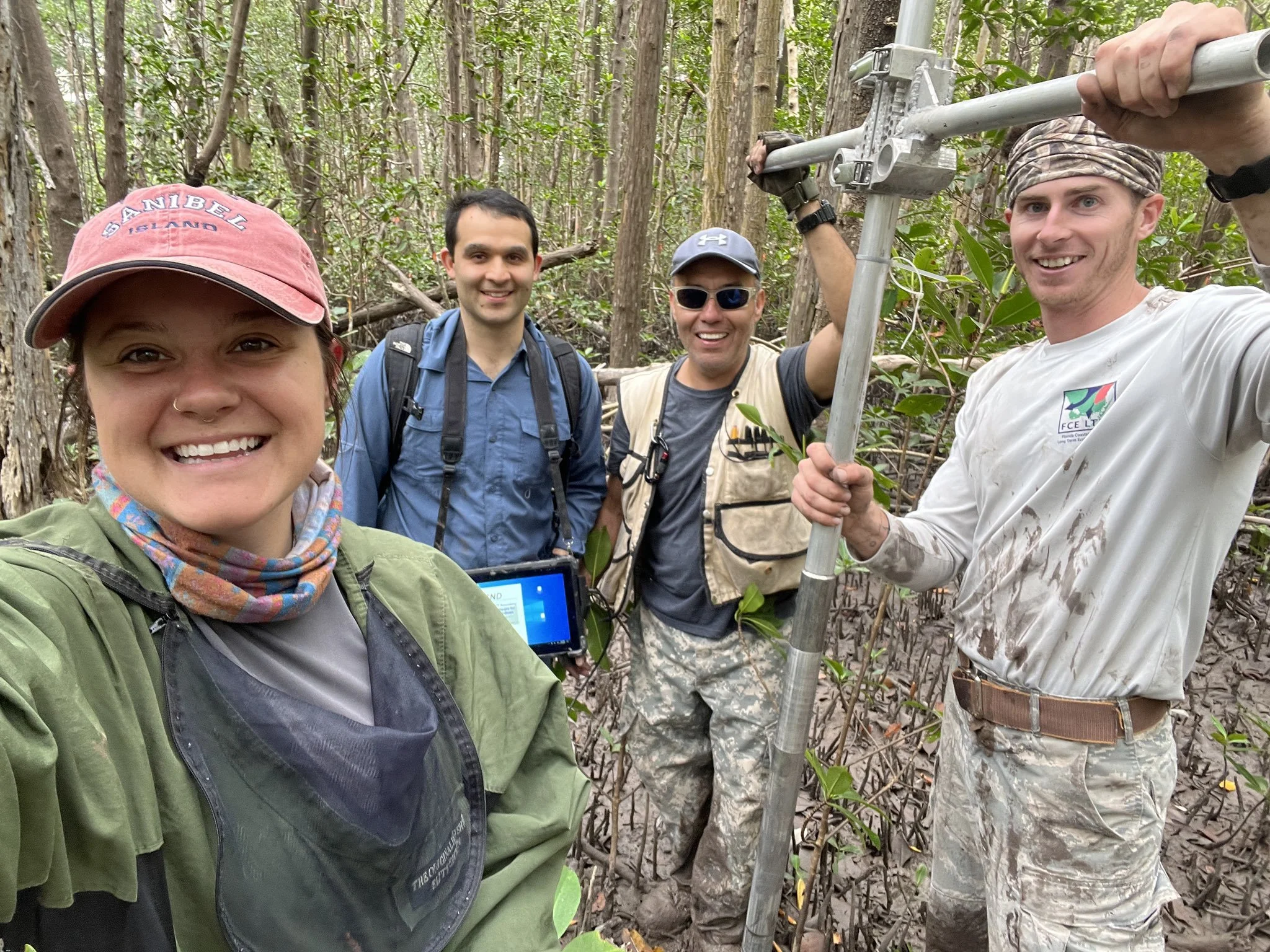
Successful field campaign in collaboration with @LSU Navid Jafari @JafariLabLSU and @FIU @luke_lambwotton, and @caitlin_reisa. We measured soil strength, resistivity, and moisture using the cone penetrometer (CPT) at our six @FCE mangrove sites in Shark and Taylor Rivers, ENP.
January 18, 2023
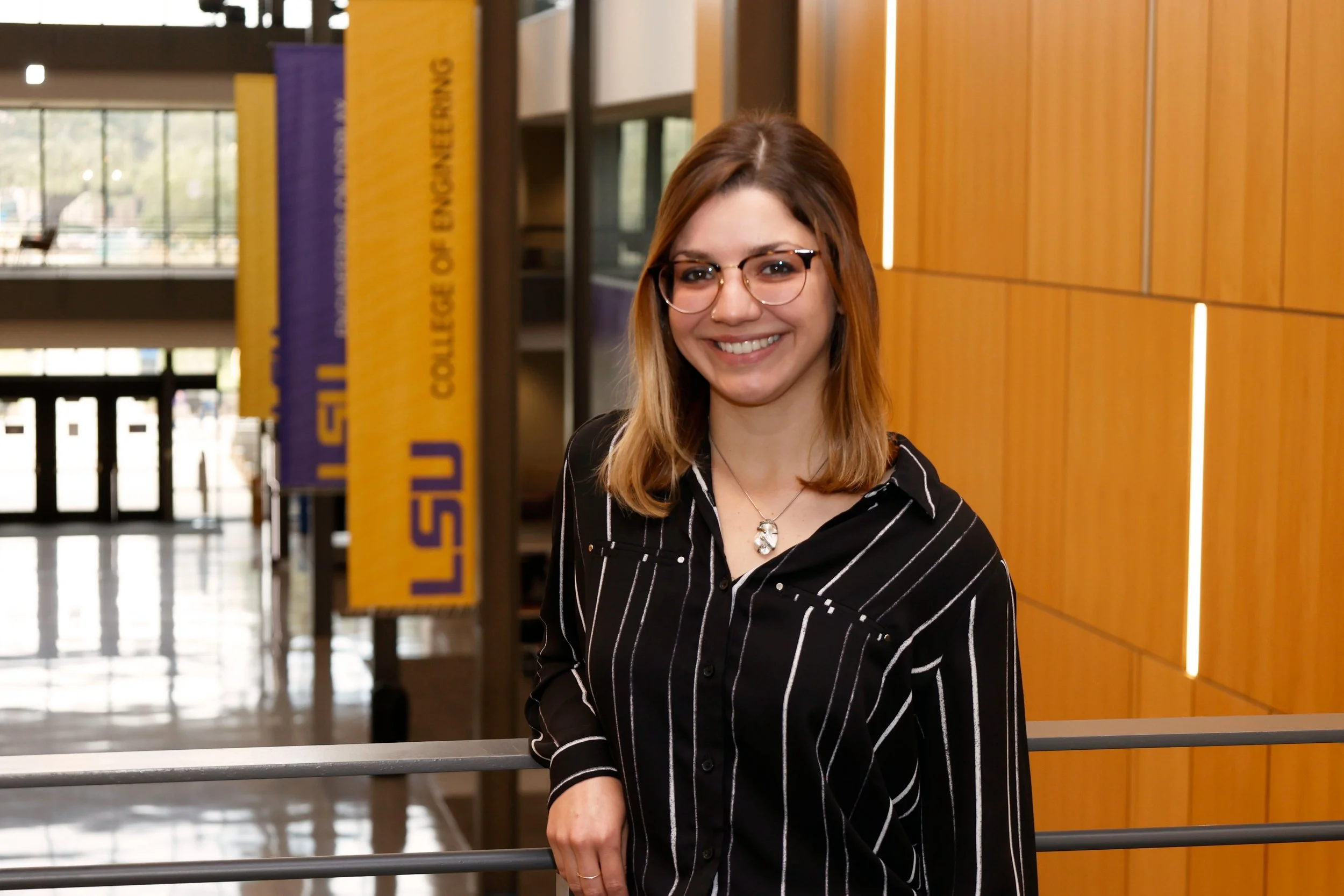
@LSU_CEE PhD student Jasmine Bekkaye is conducting recon along the section of the Florida coast hardest hit by Hurricane Ian in order to better prepare coastal areas for the amount of debris that comes with such a storm. @JafariLabLSU #ScholarshipFirst https://lsu.edu/eng/news/2023/
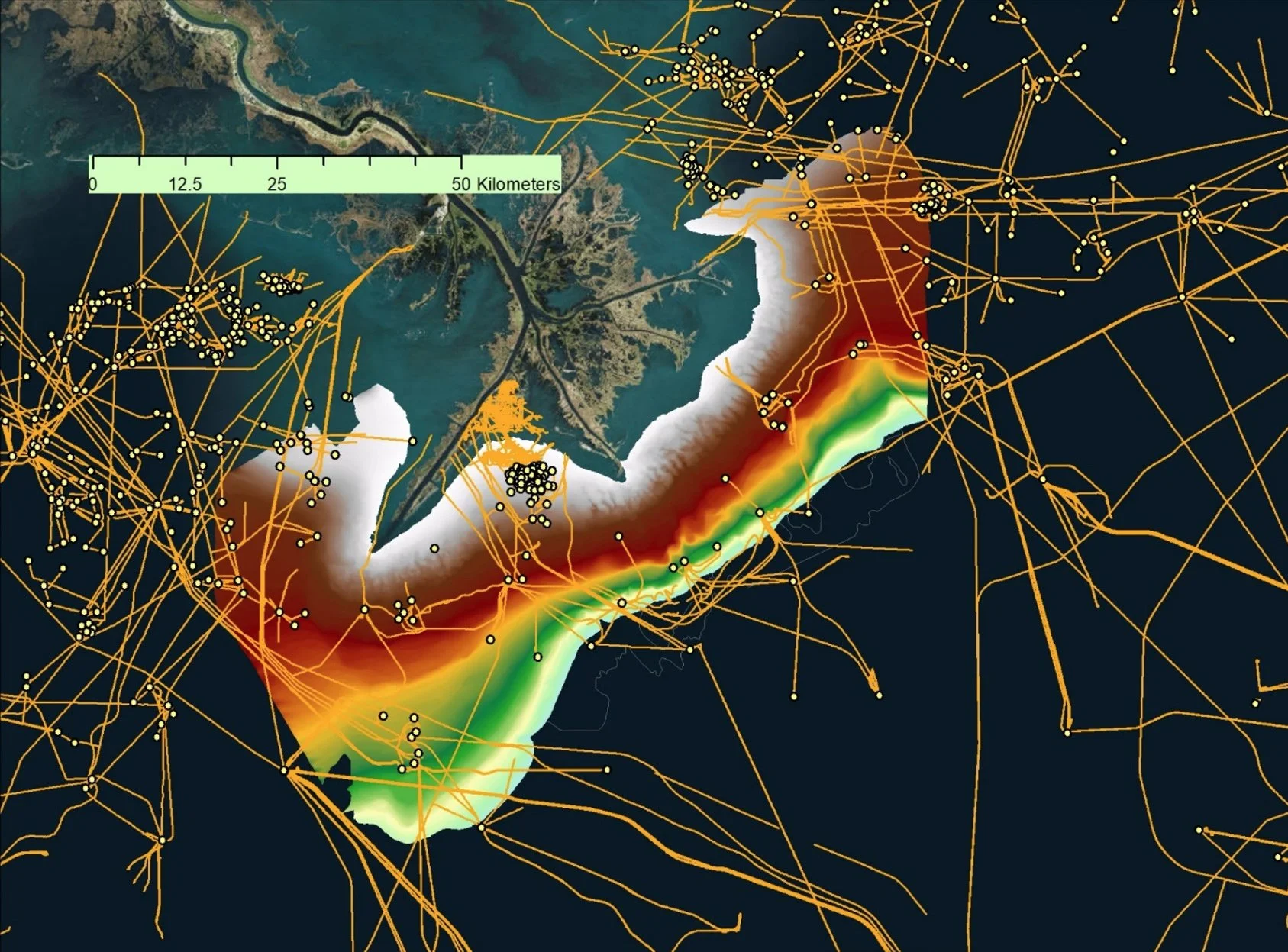
November 1, 2022
#LSU research team leads federal study of Gulf of Mexico underwater mudslides to understand impacts on energy infrastructure, shipwrecks. https://lsu.edu/mediacenter/news/2022/11/gulf-of-mexico-seabed-mudslides-map.php
October 11, 2021
Let's recognize the enormous contributions of Professor Navid Jafari to the EDS Committee, EDS Awards Committee, and the proceedings of the Geo-Extreme 2021 Specialty Conference.
September 19, 2025
Mapping Permafrost in Fairbanks
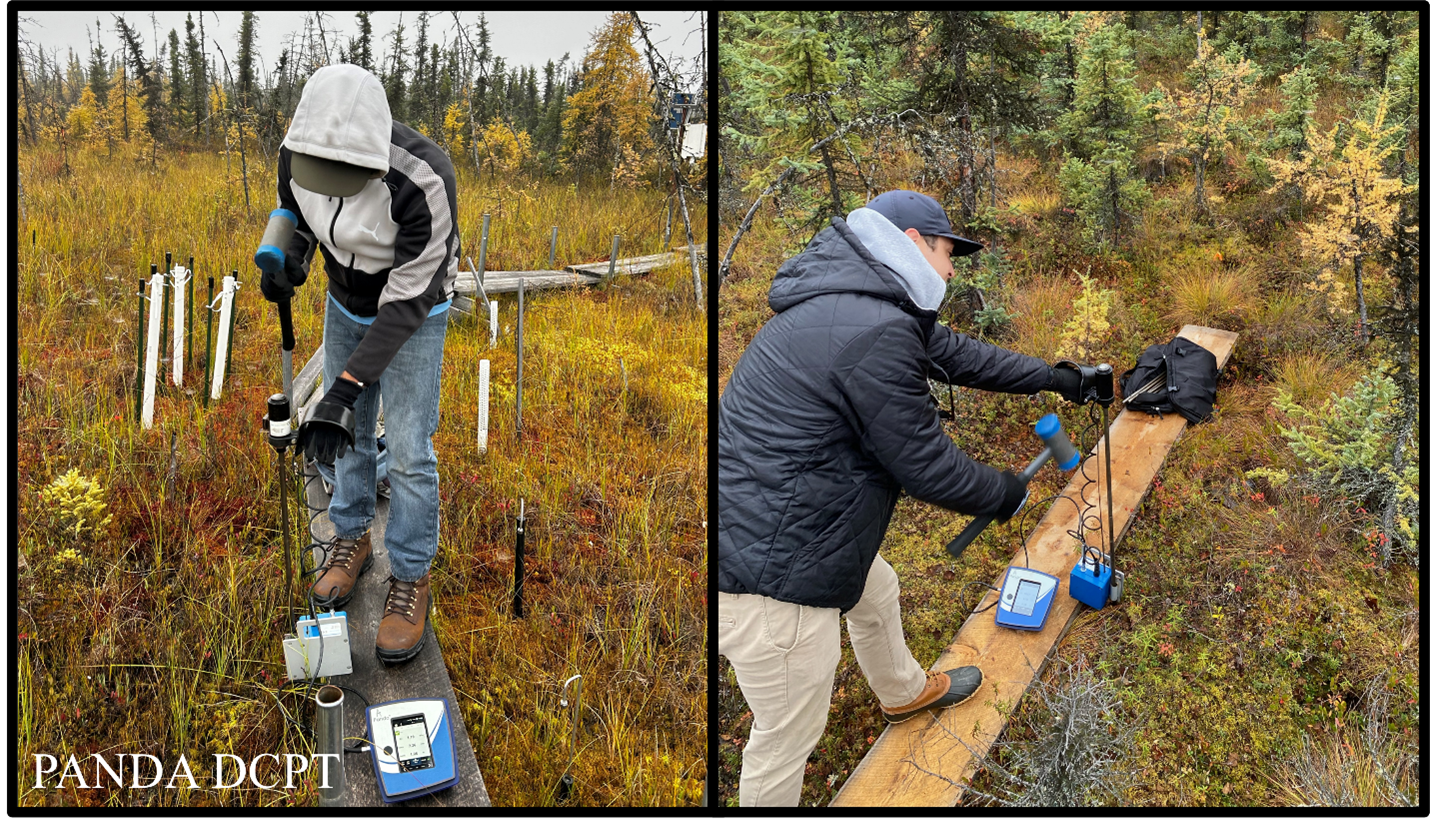
Dr. Omar Alawneh (left) led a field campaign with the help of Cyrus Bahman (right), Hamed Nasiri, and Omar Snosi to collect PANDA DCPT data in and around Fairbanks, Alaska. The PANDA allows continuous measurements of tip resistance up to depths of four meters, providing high-resolution stratigraphy data for very near-surface soil applications. Our team is leveraging this portable and easy-to-use equipment to investigate the depth of the permafrost layer at different sites in Fairbanks, both throughout the year and across the whole year. This survey is the last of three installments as the other two were conducted in July and September of 2024
July 19, 2025
Streetview and LiDAR Data Collection – Shreveport, Louisiana
Cyrus Bahman collaborated with Dr. Anand Puppala’s research group to collect land-based and aerial data along the levees around Shreveport, Louisiana. As shown on the left, defects along the levee slope were well documented by the streetview camera. This dataset will be used to test the feasibility of a machine learning classification model used to identify and determine what types of defects exist in large volumes of streetview imagery. As shown on the right, Dr. Puppala’s team is working with aerial optical and thermal imagery, mainly targeting seepage issues that are otherwise difficult to detect with the naked eye.
May 19, 2025
Geophysical Data Collection – Rockefeller Wildlife Refuge, Louisiana
Cyrus Bahman led a research team comprising Hamed Nasiri, Omar Snosi, and Omar Alawneh (left) into the chenier plain of southwest Louisiana to collect geophysical and stratigraphical data from this under-researched coastal environment. Their
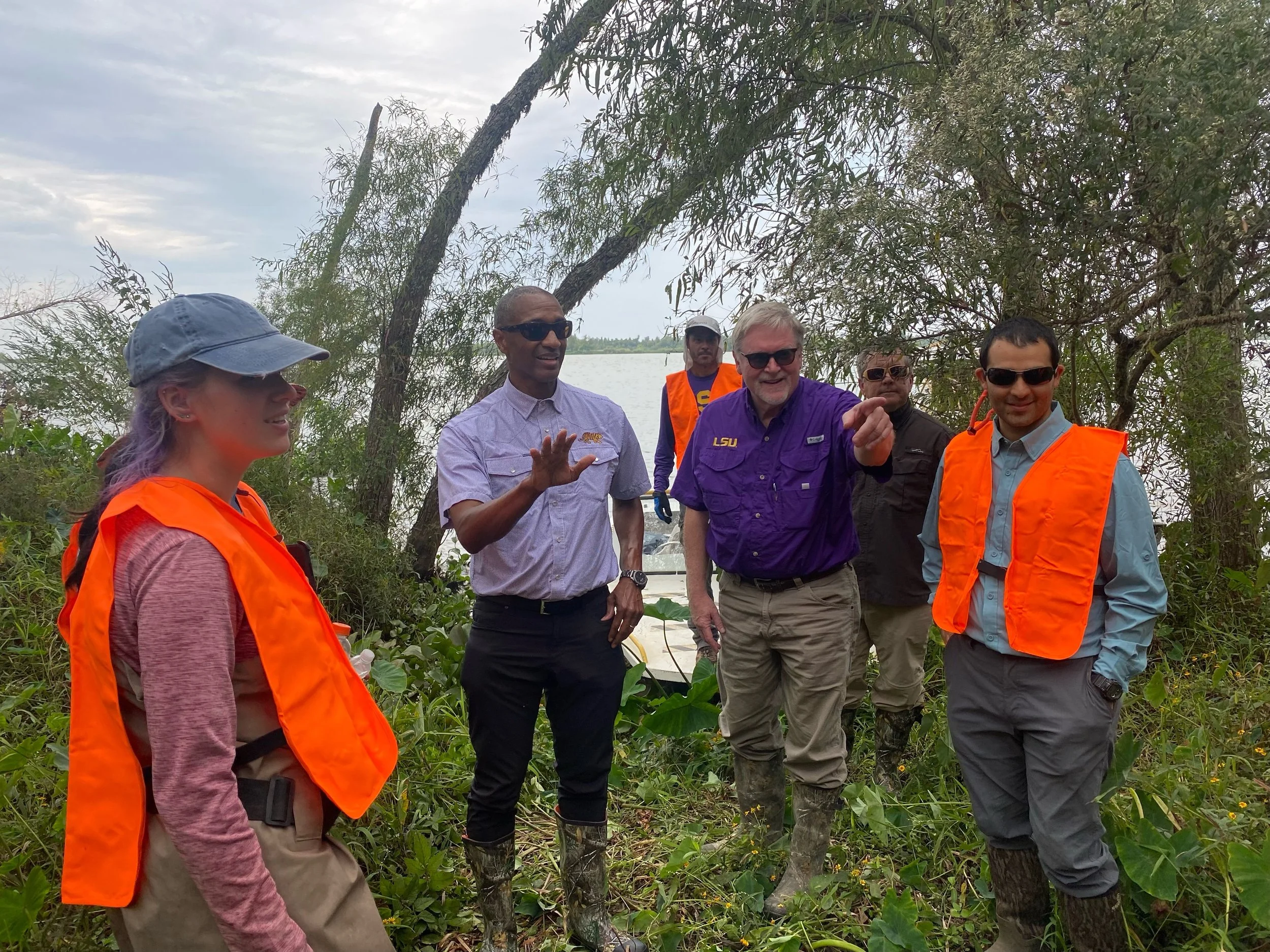
October 17, 2022
Coastal research is one of the priorities of @LSUpresident William F. Tate IV's #ScholarshipFirst agenda. Today, @WFTate4 visited the South Louisiana coast to flyover several areas, along with seeing delta growth and ecology research at Wax Lake #LSUWorks #LSUResearch
June 30, 2022
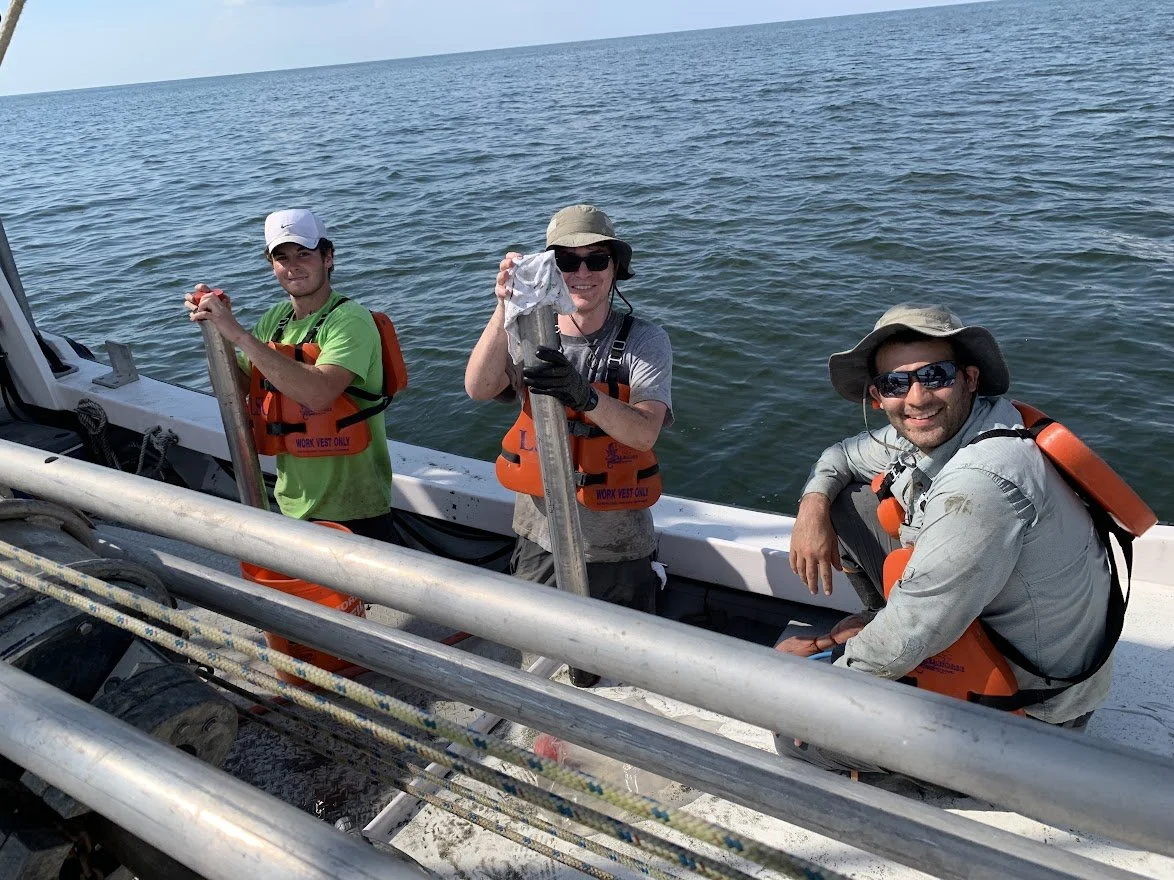
Going to Coastal Sediments 2023? Working on geology or geotechnics in the coastal zone (offshore or onshore)? Submit to our special session "Geology and Geotechnics in the Coastal Zone" convened by @RobertCMahon, @sirrahdnairb, @JafariLabLSU and I.
March 9 - 12, 2026
Jafari Research Team Advances Coastal Geotechnics at GeoCongress 2026
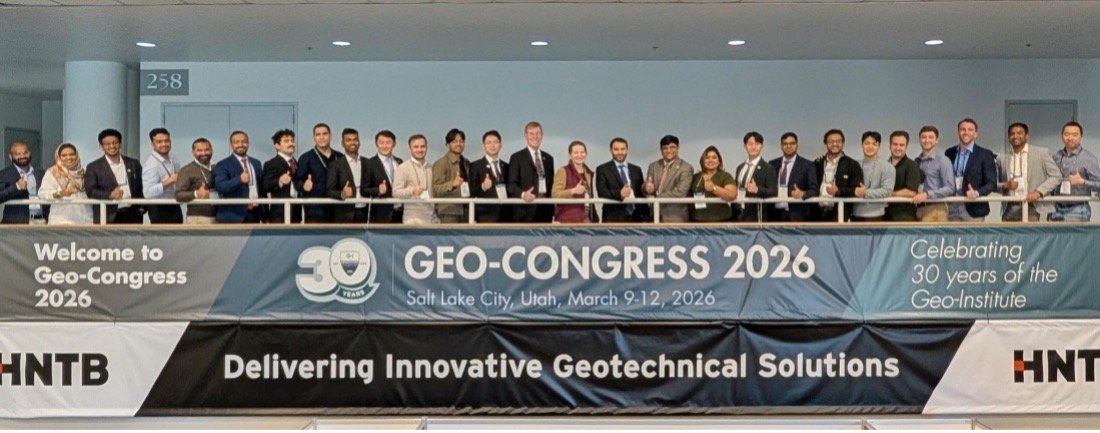
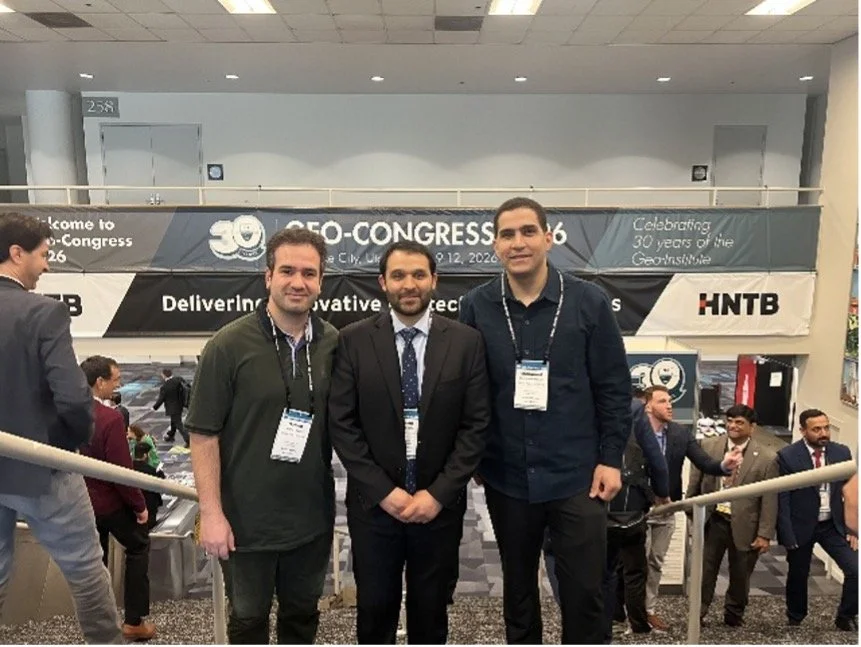
The Jafari Research Team successfully participated in GeoCongress 2026, held in Salt Lake City, Utah, from March 9–12, where team members presented research addressing critical challenges in coastal geotechnics, resilient infrastructure, and nature-based engineering solutions. The team's presentations highlighted ongoing efforts to advance the understanding of coastal processes through field investigations, laboratory testing, machine learning, and innovative geotechnical methods.
The team's contributions included:
•Mohamed Hassan, who delivered a lectern presentation titled "Shear Behavior of Mangrove-Reinforced Soils in Louisiana and Texas: A Dual Approach Using Large-Scale Direct Shear Testing and In-Situ Cone Penetration Testing."
•Cyrus Bahman, who presented a poster demonstrating the application of machine learning to predict extreme storm-related damage to railroad embankments.
•Omar Snosi, who presented a poster on the use of instrumented settlement plate data to evaluate the performance of marsh creation projects in coastal Louisiana.
November 2 - 5, 2026
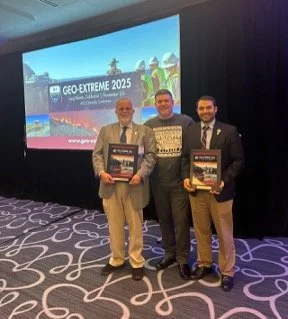
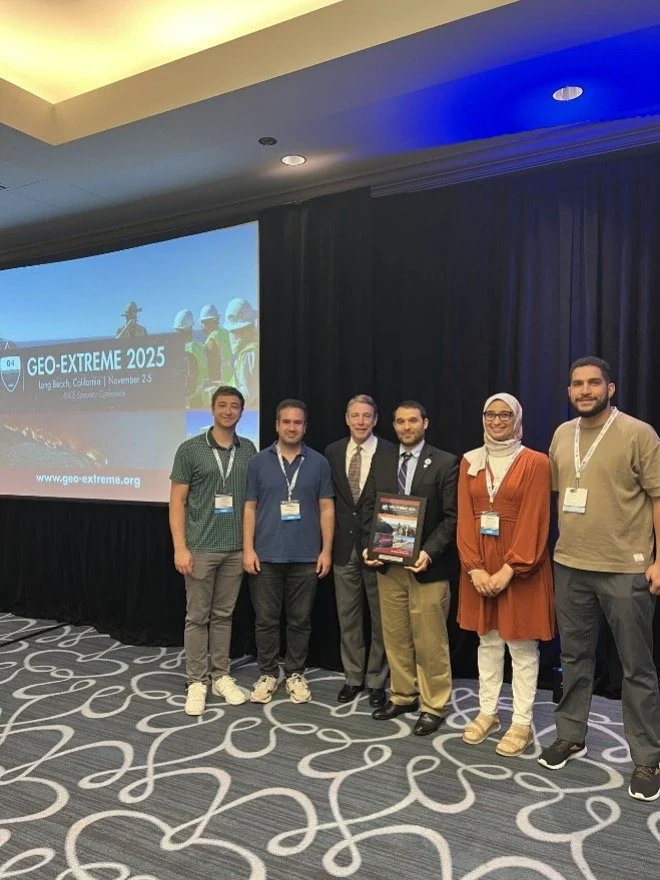
Jafari Research Team Showcases Coastal Geotechnics Research at Geo-Extreme 2025
The Jafari Research Team had a strong presence at Geo-Extreme 2025, where Dr. Navid Jafari served as Conference Co-Chair. Research students from the team presented innovative studies addressing some of the most pressing challenges in coastal geotechnics and resilient infrastructure. Mohamed Hassan presented a novel field-testing approach to evaluate how mangrove root systems improve wetland stability and resilience against extreme coastal hazards. Hamed Nasiri showcased his work on the geotechnical behavior of crushed-shell deposits in chenier plains and their role in accelerating Gulf Coast erosion. Cyrus Bahman shared research on hurricane-driven shoreline erosion at Rockefeller Wildlife Refuge using integrated geotechnical and geophysical investigations.
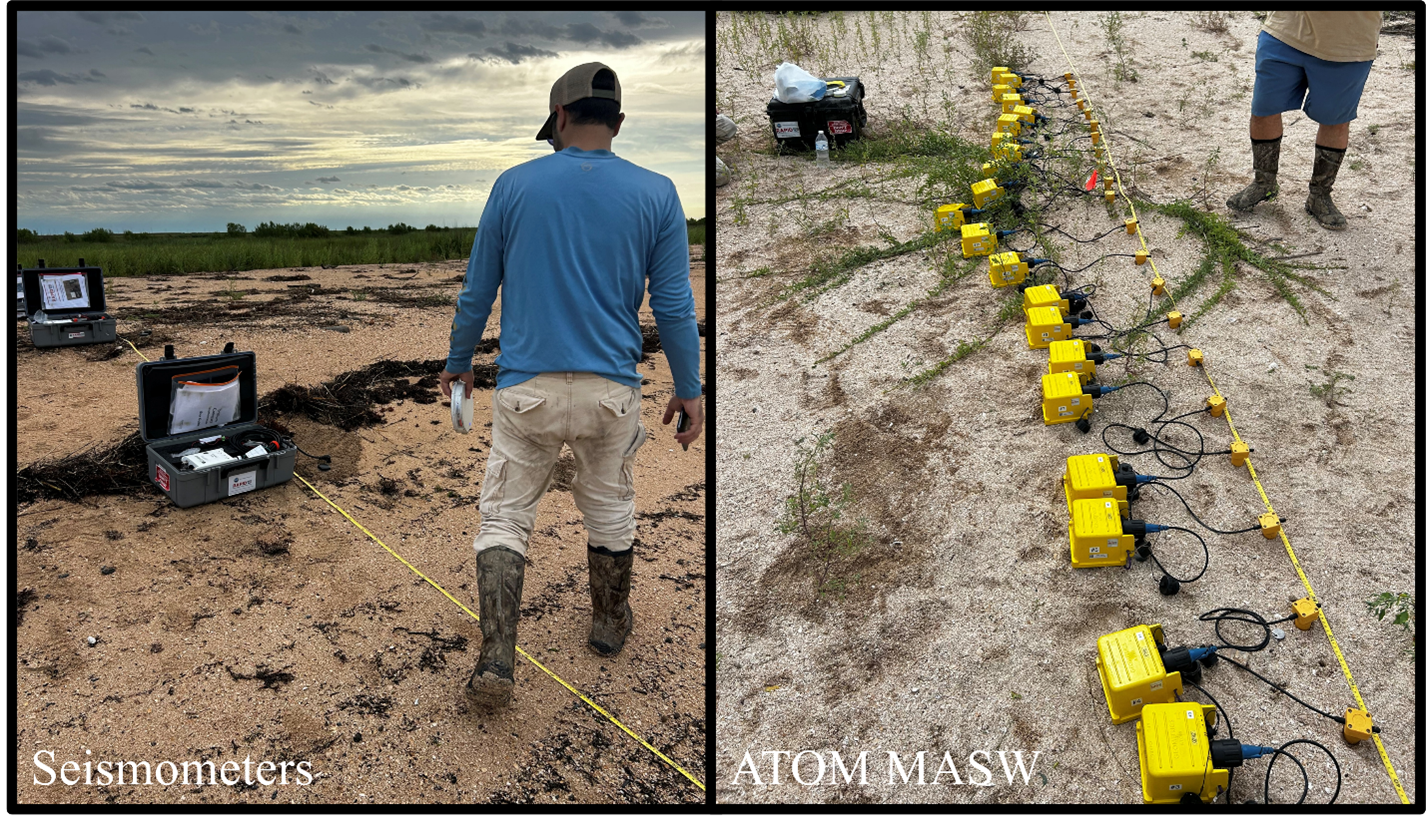
field campaign targeted three transects, each exhibiting different levels of erosion mitigation from human intervention, allowing for valuable comparisons across varying coastal management strategies. To better capture the complexity of the region’s geomorphology, the team employed three specialized instruments, each serving a unique purpose. The ATOM Multichannel Analysis of Surface Waves (MASW), shown on the right, delivered high-resolution shear wave velocity profiles with depth. Compact Nanometrics Trillium seismometers, shown on the left, recorded fundamental site frequencies of soils at different locations, offering insight into local ground response characteristics. PANDA Dynamic Cone Penetrometer testing (DCPT) was also done for determining stratigraphy of the subsurface. By integrating the complementary datasets from these tools, the researchers aim to deepen our understanding of how natural processes…